Buy zxa.eu ?
We are moving the project
zxa.eu .
Are you interested in purchasing the domain
zxa.eu ?
domain@kv-gmbh.de · 0541-91531010
Buy zxa.eu ?
Can hydrogen bonding occur between hydrogen fluoride (HF) and water (H2O)?
Yes, hydrogen bonding can occur between hydrogen fluoride (HF) and water (H2O). Both HF and water molecules have hydrogen atoms bonded to highly electronegative atoms (fluorine and oxygen, respectively), creating a partial positive charge on the hydrogen atoms. This allows for hydrogen bonding to occur between the partially positive hydrogen atoms of HF and the partially negative oxygen atoms of water. Therefore, HF and water can form hydrogen bonds with each other. **
Why are there 3 points in hydrogen bonding?
There are 3 points in hydrogen bonding because it involves the attraction between a hydrogen atom bonded to an electronegative atom (such as oxygen or nitrogen) and another electronegative atom. The hydrogen atom acts as a bridge between the two electronegative atoms, creating a strong dipole-dipole interaction. This interaction results in a partial positive charge on the hydrogen atom and a partial negative charge on the electronegative atom, leading to the formation of a hydrogen bond. **


Similar search terms for Hydrogen bonding
Top-Angebote
Products related to Hydrogen bonding:
-
Orion Das FRIVOLE - Bonding Couple's Game + Accessories (in German)Playful Introduction to the World of Bondage – Das FRIVOLE Board Game with Accessories!Why is it good?Discover the exciting world of dominant and submissive role-plays in a playful wayIdea cards ensure you never run out of new, exciting tasksThe dice add unpredictable excitement to your time together – you'll never know what to expect!Gift accessories – cuffs, blindfold, whip, and vibrator – so you can dive right inPerfect choice for beginners experimenting with BDSM experiencesNote:The cards and instructions are in German – basic language skills might be advantageousThe color and content of the package may vary, but it’s always an exciting and complete surpriseThe vibrator requires 1 AA battery, which might not be included – please checkPackage contents:Idea cards (in German)2 dice1 pair of plush handcuffs1 blindfold with an elastic headband1 small whip – with a rubber-strand, penis-shaped handle1 bullet vibrator (operates with 1 x AA battery – sold separately)Instructions (in German)Product features:Unisex set – suitable for both women and menColorful BDSM experiences in one boxVarious sensory stimulation: sight, touch, excitementIdeal for beginners, with simple tools for explorationDice game elements for spontaneous, exciting encountersWeight: approx. 300 gCleaning recommendation: Clean the cuffs and blindfold by hand in lukewarm water with mild soap. Wipe the vibrator with a dry cloth, do not immerse it in water!User manual20,75 £*Shipping: 6,10 £Secure redirect to the provider
-
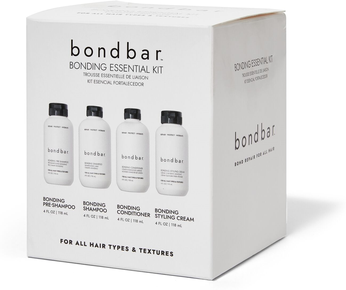
Bondbar Bonding Essential Kitbondbar Bonding Essentials Kit comes with everything you need to kickstart your healthy hair care routine. It includes bondbar Bonding Pre-Shampoo, bondbar Bonding Shampoo, bondbar Bonding Conditioner and bondbar Bonding Styling Cream. Hair is made...29,99 $*Shipping: 0,00 $Secure redirect to the provider
-
WELLA Professionals Welloxon Perfect Hydrogen Peroxide 12% 40 VolHealth and Beauty Coloration WELLA Professionals Welloxon Perfect Hydrogen Peroxide 12% 40 Vol What is WELLA Professionals Welloxon Perfect Hydrogen Peroxide 12% 40 Vol. WELLA Professionals Welloxon Perfect Hydrogen Peroxide 12% 40 Vol. is a high-quality oxidant specifically designed to enhance the dyes and bleaches of the Wella range. Its stabilized and creamy formula guarantees an even application, better color adherence and professional results. Ideal for achieving intense lightening and vibrant colors with full coverage. Benefits of WELLA Professionals Welloxon Perfect Hydrogen Peroxide 12% 40 Vol. Enhances color and ensures even coverage. Allows lightening up to four tones effectively. Stabilized formula to minimize hair damage. Creamy texture that facilitates application and prevents dripping. Compatible with Wella Professionals dyes and bleaches. Who is WELLA Professionals Welloxon Perfect Hydrogen Peroxide 12% 40 Vol. for? This product is recommended for: Hairdressing professionals looking for high-quality colouring and bleaching results. Experienced dye users who wish to lighten their hair several shades. Wella permanent dye users who require a reliable peroxide for even, long-lasting coverage. How do I apply WELLA Professionals Welloxon Perfect Hydrogen Peroxide 12% 40 Vol.? - Mix : Combine with Wella color or bleach in the proportion recommended by the manufacturer. - Application : Use a brush to evenly distribute the mixture over dry, unwashed hair. - Exposure time : Allow to act according to the instructions of the dye or bleach used. - Rinse : Wash with plenty of water and apply a moisturizing shampoo and conditioner to protect the hair fiber. Use of the product WELLA Professionals Welloxon Perfect Hydrogen Peroxide 12% 40 Vol. Always follow the directions for use of the chosen colour or bleach. Wear gloves to protect your hands during application. Perform an allergy test before use. Do not use on irritated or damaged scalp. For best results, use professional application tools. Buy WELLA Professionals Welloxon Perfect Hydrogen Peroxide 12% 40 Vol. Get WELLA Professionals Welloxon Perfect Hydrogen Peroxide 12% 40 Vol. at the best price in our online store. Enjoy a high-quality oxidant that guarantees professional results in every application. Don't wait any longer and enhance your hair color with the best technology from Wella Professionals. Buy now and show off a radiant and long-lasting color!8,38 £*Shipping: 4,99 £Secure redirect to the provider


-
Why is there no hydrogen bonding in HI?
There is no hydrogen bonding in HI because hydrogen bonding occurs between hydrogen and highly electronegative elements like oxygen, nitrogen, or fluorine. In HI, hydrogen is bonded to iodine, which is less electronegative than oxygen, nitrogen, or fluorine. Therefore, the hydrogen in HI does not have a strong enough partial positive charge to form hydrogen bonds with other molecules. **
-
Does hydrogen bonding also occur in methane (CH4)?
No, hydrogen bonding does not occur in methane (CH4). Hydrogen bonding occurs when hydrogen atoms are bonded to highly electronegative atoms such as oxygen, nitrogen, or fluorine. In methane, the hydrogen atoms are bonded to carbon, which is not electronegative enough to form hydrogen bonds. Therefore, methane does not exhibit hydrogen bonding. **
-
What is the difference between hydrogen bonding and dipole-dipole interactions?
Hydrogen bonding is a specific type of dipole-dipole interaction that occurs between a hydrogen atom bonded to a highly electronegative atom (such as oxygen, nitrogen, or fluorine) and another electronegative atom in a different molecule. This type of interaction is stronger than regular dipole-dipole interactions because of the large electronegativity difference between the hydrogen and the other atom, resulting in a stronger attraction between the molecules. In contrast, dipole-dipole interactions occur between the positive end of one polar molecule and the negative end of another polar molecule, but do not involve a hydrogen atom bonded to a highly electronegative atom. **
-
Is the density anomaly of water the result of hydrogen bonding?
Yes, the density anomaly of water is the result of hydrogen bonding. When water is cooled below 4°C, the hydrogen bonds between water molecules start to form a more open and organized structure, causing the density of water to decrease. This is why ice is less dense than liquid water. The unique arrangement of hydrogen bonds in water is what gives it its unusual density behavior, making it one of the few substances that becomes less dense when it solidifies. **


What does a concept map for hydrogen bonding in chemistry look like?
A concept map for hydrogen bonding in chemistry would typically include the central concept of hydrogen bonding, with branches extending to related concepts such as electronegativity, polarity, and intermolecular forces. It would also include specific examples of molecules that exhibit hydrogen bonding, such as water, ammonia, and alcohols. The map would visually show the connections between these concepts and how they relate to the phenomenon of hydrogen bonding in chemistry. Additionally, it may include arrows or lines to indicate the direction of influence or relationship between the different concepts. **
Can you explain hydrogen bonding and Van der Waals forces using examples?
Hydrogen bonding occurs when a hydrogen atom is covalently bonded to a highly electronegative atom (such as oxygen, nitrogen, or fluorine) and is also attracted to another electronegative atom. This creates a strong dipole-dipole interaction, resulting in a relatively strong bond. An example of hydrogen bonding is the interaction between water molecules, where the hydrogen atoms are attracted to the oxygen atoms of neighboring water molecules. Van der Waals forces, on the other hand, are weak intermolecular forces that occur between all molecules. They are caused by fluctuations in electron distribution within molecules, leading to temporary dipoles. An example of Van der Waals forces is the interaction between nonpolar molecules, such as the forces between methane molecules. In summary, hydrogen bonding is a relatively strong intermolecular force that occurs in molecules with hydrogen atoms bonded to highly electronegative atoms, while Van der Waals forces are weaker forces that occur in all molecules due **
Top-Angebote
Products related to Hydrogen bonding:
-
Gen Professional Hydrogen 90 CapsulesNutrition and Supplements Vitamins and minerals Gen Professional Hydrogen 90 Capsules Food Supplement based on Vitamins, Minerals, and coenzyme Q10. Suitable for amateur and professional athletes, especially endurance athletes, vegans, vegetarians, and athletic women during their period. Instructions for use: Take 1 capsule a day.14,64 £*Shipping: 3,99 £Secure redirect to the provider
-
Orion Das FRIVOLE - Bonding Couple's Game + Accessories (in German)Playful Introduction to the World of Bondage – Das FRIVOLE Board Game with Accessories!Why is it good?Discover the exciting world of dominant and submissive role-plays in a playful wayIdea cards ensure you never run out of new, exciting tasksThe dice add unpredictable excitement to your time together – you'll never know what to expect!Gift accessories – cuffs, blindfold, whip, and vibrator – so you can dive right inPerfect choice for beginners experimenting with BDSM experiencesNote:The cards and instructions are in German – basic language skills might be advantageousThe color and content of the package may vary, but it’s always an exciting and complete surpriseThe vibrator requires 1 AA battery, which might not be included – please checkPackage contents:Idea cards (in German)2 dice1 pair of plush handcuffs1 blindfold with an elastic headband1 small whip – with a rubber-strand, penis-shaped handle1 bullet vibrator (operates with 1 x AA battery – sold separately)Instructions (in German)Product features:Unisex set – suitable for both women and menColorful BDSM experiences in one boxVarious sensory stimulation: sight, touch, excitementIdeal for beginners, with simple tools for explorationDice game elements for spontaneous, exciting encountersWeight: approx. 300 gCleaning recommendation: Clean the cuffs and blindfold by hand in lukewarm water with mild soap. Wipe the vibrator with a dry cloth, do not immerse it in water!User manual20,75 £*Shipping: 6,10 £Secure redirect to the provider
-
Bondbar Bonding Essential Kitbondbar Bonding Essentials Kit comes with everything you need to kickstart your healthy hair care routine. It includes bondbar Bonding Pre-Shampoo, bondbar Bonding Shampoo, bondbar Bonding Conditioner and bondbar Bonding Styling Cream. Hair is made...29,99 $*Shipping: 0,00 $Secure redirect to the provider
-
Can hydrogen bonding occur between hydrogen fluoride (HF) and water (H2O)?
Yes, hydrogen bonding can occur between hydrogen fluoride (HF) and water (H2O). Both HF and water molecules have hydrogen atoms bonded to highly electronegative atoms (fluorine and oxygen, respectively), creating a partial positive charge on the hydrogen atoms. This allows for hydrogen bonding to occur between the partially positive hydrogen atoms of HF and the partially negative oxygen atoms of water. Therefore, HF and water can form hydrogen bonds with each other. **
-
Why are there 3 points in hydrogen bonding?
There are 3 points in hydrogen bonding because it involves the attraction between a hydrogen atom bonded to an electronegative atom (such as oxygen or nitrogen) and another electronegative atom. The hydrogen atom acts as a bridge between the two electronegative atoms, creating a strong dipole-dipole interaction. This interaction results in a partial positive charge on the hydrogen atom and a partial negative charge on the electronegative atom, leading to the formation of a hydrogen bond. **
-
Why is there no hydrogen bonding in HI?
There is no hydrogen bonding in HI because hydrogen bonding occurs between hydrogen and highly electronegative elements like oxygen, nitrogen, or fluorine. In HI, hydrogen is bonded to iodine, which is less electronegative than oxygen, nitrogen, or fluorine. Therefore, the hydrogen in HI does not have a strong enough partial positive charge to form hydrogen bonds with other molecules. **
-
Does hydrogen bonding also occur in methane (CH4)?
No, hydrogen bonding does not occur in methane (CH4). Hydrogen bonding occurs when hydrogen atoms are bonded to highly electronegative atoms such as oxygen, nitrogen, or fluorine. In methane, the hydrogen atoms are bonded to carbon, which is not electronegative enough to form hydrogen bonds. Therefore, methane does not exhibit hydrogen bonding. **
Similar search terms for Hydrogen bonding
-
WELLA Professionals Welloxon Perfect Hydrogen Peroxide 12% 40 VolHealth and Beauty Coloration WELLA Professionals Welloxon Perfect Hydrogen Peroxide 12% 40 Vol What is WELLA Professionals Welloxon Perfect Hydrogen Peroxide 12% 40 Vol. WELLA Professionals Welloxon Perfect Hydrogen Peroxide 12% 40 Vol. is a high-quality oxidant specifically designed to enhance the dyes and bleaches of the Wella range. Its stabilized and creamy formula guarantees an even application, better color adherence and professional results. Ideal for achieving intense lightening and vibrant colors with full coverage. Benefits of WELLA Professionals Welloxon Perfect Hydrogen Peroxide 12% 40 Vol. Enhances color and ensures even coverage. Allows lightening up to four tones effectively. Stabilized formula to minimize hair damage. Creamy texture that facilitates application and prevents dripping. Compatible with Wella Professionals dyes and bleaches. Who is WELLA Professionals Welloxon Perfect Hydrogen Peroxide 12% 40 Vol. for? This product is recommended for: Hairdressing professionals looking for high-quality colouring and bleaching results. Experienced dye users who wish to lighten their hair several shades. Wella permanent dye users who require a reliable peroxide for even, long-lasting coverage. How do I apply WELLA Professionals Welloxon Perfect Hydrogen Peroxide 12% 40 Vol.? - Mix : Combine with Wella color or bleach in the proportion recommended by the manufacturer. - Application : Use a brush to evenly distribute the mixture over dry, unwashed hair. - Exposure time : Allow to act according to the instructions of the dye or bleach used. - Rinse : Wash with plenty of water and apply a moisturizing shampoo and conditioner to protect the hair fiber. Use of the product WELLA Professionals Welloxon Perfect Hydrogen Peroxide 12% 40 Vol. Always follow the directions for use of the chosen colour or bleach. Wear gloves to protect your hands during application. Perform an allergy test before use. Do not use on irritated or damaged scalp. For best results, use professional application tools. Buy WELLA Professionals Welloxon Perfect Hydrogen Peroxide 12% 40 Vol. Get WELLA Professionals Welloxon Perfect Hydrogen Peroxide 12% 40 Vol. at the best price in our online store. Enjoy a high-quality oxidant that guarantees professional results in every application. Don't wait any longer and enhance your hair color with the best technology from Wella Professionals. Buy now and show off a radiant and long-lasting color!8,38 £*Shipping: 4,99 £Secure redirect to the provider
-
S&S Northern Merlin Gas Detector X-Range - HydrogenThe Merlin Gas Detector X-Range for Hydrogen is designed to integrate seamlessly with the S&S; Merlin range of Gas Detection Panels and Safety Systems. Featuring a compact, modern, and digital design, this detector is both aesthetically pleasing and easy to install, making it ideal for industrial and commercial indoor applications. Advanced Detection: Effectively detects hydrogen gas, ensuring safety in various environments. Dual-Level Alarms: Features both low and high-level alarms for comprehensive safety monitoring. Visual Indicators: Traffic light-style gas level display provides clear and immediate visual feedback on gas levels. Easy Installation: Designed for straightforward setup, ensuring hassle-free integration.217,50 £*Shipping: 0,00 £Secure redirect to the provider
-
Olaplex Nº 7 Bonding OilA hair-care product. It an ultralight, highly concentrated that adds smoothness and strength and enhances all hair types and textures. When used before thermal smodeling devices provides heat protection up to 230°C/450°F. Reduces drying time while smoothing and untangling hair slings. It does not leave any residues or add weight, and can even be used on very thin hair.40,64 £*Shipping: 6,94 £Secure redirect to the provider
-
What is the difference between hydrogen bonding and dipole-dipole interactions?
Hydrogen bonding is a specific type of dipole-dipole interaction that occurs between a hydrogen atom bonded to a highly electronegative atom (such as oxygen, nitrogen, or fluorine) and another electronegative atom in a different molecule. This type of interaction is stronger than regular dipole-dipole interactions because of the large electronegativity difference between the hydrogen and the other atom, resulting in a stronger attraction between the molecules. In contrast, dipole-dipole interactions occur between the positive end of one polar molecule and the negative end of another polar molecule, but do not involve a hydrogen atom bonded to a highly electronegative atom. **
-
Is the density anomaly of water the result of hydrogen bonding?
Yes, the density anomaly of water is the result of hydrogen bonding. When water is cooled below 4°C, the hydrogen bonds between water molecules start to form a more open and organized structure, causing the density of water to decrease. This is why ice is less dense than liquid water. The unique arrangement of hydrogen bonds in water is what gives it its unusual density behavior, making it one of the few substances that becomes less dense when it solidifies. **
-
What does a concept map for hydrogen bonding in chemistry look like?
A concept map for hydrogen bonding in chemistry would typically include the central concept of hydrogen bonding, with branches extending to related concepts such as electronegativity, polarity, and intermolecular forces. It would also include specific examples of molecules that exhibit hydrogen bonding, such as water, ammonia, and alcohols. The map would visually show the connections between these concepts and how they relate to the phenomenon of hydrogen bonding in chemistry. Additionally, it may include arrows or lines to indicate the direction of influence or relationship between the different concepts. **
-
Can you explain hydrogen bonding and Van der Waals forces using examples?
Hydrogen bonding occurs when a hydrogen atom is covalently bonded to a highly electronegative atom (such as oxygen, nitrogen, or fluorine) and is also attracted to another electronegative atom. This creates a strong dipole-dipole interaction, resulting in a relatively strong bond. An example of hydrogen bonding is the interaction between water molecules, where the hydrogen atoms are attracted to the oxygen atoms of neighboring water molecules. Van der Waals forces, on the other hand, are weak intermolecular forces that occur between all molecules. They are caused by fluctuations in electron distribution within molecules, leading to temporary dipoles. An example of Van der Waals forces is the interaction between nonpolar molecules, such as the forces between methane molecules. In summary, hydrogen bonding is a relatively strong intermolecular force that occurs in molecules with hydrogen atoms bonded to highly electronegative atoms, while Van der Waals forces are weaker forces that occur in all molecules due **
* All prices are inclusive of VAT and, if applicable, plus shipping costs. The offer information is based on the details provided by the respective shop and is updated through automated processes. Real-time updates do not occur, so deviations can occur in individual cases. ** Note: Parts of this content were created by AI.