Buy zxa.eu ?
We are moving the project
zxa.eu .
Are you interested in purchasing the domain
zxa.eu ?
domain@kv-gmbh.de · 0541-91531010
Buy zxa.eu ?
Which option is better: shredder BGA or TAUM?
The choice between shredder BGA and TAUM depends on the specific needs and preferences of the user. Shredder BGA is known for its high-speed and efficient shredding capabilities, making it ideal for large-scale operations. On the other hand, TAUM offers a more compact and versatile design, making it suitable for smaller spaces and a wider range of materials. Ultimately, the better option would be determined by factors such as the volume of materials to be shredded, available space, and desired features. **
What is the depreciation on operating and business equipment (BGA)?
Depreciation on operating and business equipment (BGA) refers to the gradual decrease in the value of these assets over time. This decrease in value is typically due to wear and tear, obsolescence, or other factors that affect the usefulness of the equipment. Depreciation is an important accounting concept as it allows businesses to allocate the cost of the equipment over its useful life, helping to accurately reflect the true cost of using the equipment in the company's financial statements. This depreciation expense is then recorded on the company's income statement, reducing the reported net income and ultimately impacting the company's tax liability. **

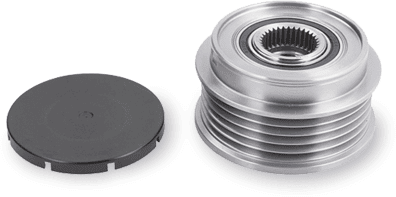
Similar search terms for BGA-DC5633-Alternator-clutch
Top-Angebote
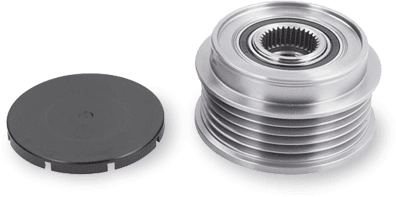
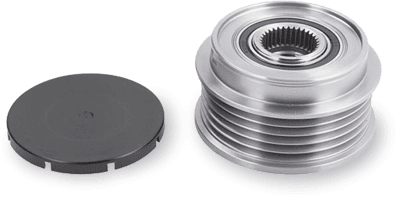
Products related to BGA-DC5633-Alternator-clutch:
-
BGA DC2204 Alternator clutch pulleyWidth [mm]: 38,5; for manufacturer number: F-237101.XX; Width 1 [mm]: 38.5; Alternator Charging Current [A]: 150; Vehicle Equipment: for vehicles with air conditioning, for vehicles with start-stop function34,99 £*Shipping: 8,45 £Secure redirect to the provider


-
What about the alternator?
The alternator is a crucial component of a vehicle's charging system. It is responsible for converting mechanical energy from the engine into electrical energy to power the vehicle's electrical systems and recharge the battery. If the alternator fails, the battery will not be recharged and the vehicle's electrical systems will not function properly. It is important to have the alternator inspected and maintained regularly to ensure the proper functioning of the vehicle. **
-
Is my motorcycle's alternator defective?
To determine if your motorcycle's alternator is defective, you can perform a few tests. First, check the battery voltage with the engine off and then again with the engine running. If the voltage doesn't increase when the engine is running, it could indicate a problem with the alternator. You can also use a multimeter to test the output of the alternator to see if it is within the manufacturer's specifications. Additionally, if you notice dimming headlights or other electrical issues while riding, it could be a sign of a defective alternator. If any of these tests indicate a problem, it's best to have a professional mechanic inspect and diagnose the issue. **
-
Is the motorcycle's alternator broken?
Without further information or inspection, it is difficult to determine if the motorcycle's alternator is broken. However, common signs of a broken alternator include dimming headlights, a dead battery, strange noises, or difficulty starting the motorcycle. It is best to have a professional mechanic inspect the motorcycle to accurately diagnose and repair any issues with the alternator. **
-
Is the alternator output sufficient?
To determine if the alternator output is sufficient, you will need to measure the voltage output of the alternator while the engine is running. A healthy alternator should produce around 13.8 to 14.2 volts. If the voltage output is within this range, then the alternator output is likely sufficient. However, if the voltage output is consistently below this range, then the alternator may not be providing enough power to the vehicle's electrical system and may need to be replaced or repaired. **

Do electric cars have an alternator?
No, electric cars do not have an alternator. Alternators are used in traditional gasoline-powered vehicles to generate electricity and recharge the battery while the engine is running. In electric cars, the battery is charged by plugging the vehicle into an external power source, such as a charging station or a wall outlet, rather than through an alternator. Electric cars use an onboard charger to convert AC power from the grid into DC power to charge the battery. **
How do you replace the alternator?
To replace the alternator, start by disconnecting the negative battery cable to prevent any electrical accidents. Then, locate the alternator and remove any components blocking access to it. Next, disconnect the electrical connectors and mounting bolts securing the alternator in place. After removing the old alternator, install the new one in the reverse order, making sure to tighten all bolts and reconnect all electrical connections. Finally, reattach the negative battery cable and start the vehicle to ensure the new alternator is functioning properly. If you are unsure about any step, it is best to consult a professional mechanic for assistance. **
Top-Angebote
Products related to BGA-DC5633-Alternator-clutch:
-
BGA DC2204 Alternator clutch pulleyWidth [mm]: 38,5; for manufacturer number: F-237101.XX; Width 1 [mm]: 38.5; Alternator Charging Current [A]: 150; Vehicle Equipment: for vehicles with air conditioning, for vehicles with start-stop function34,99 £*Shipping: 8,45 £Secure redirect to the provider
-
Which option is better: shredder BGA or TAUM?
The choice between shredder BGA and TAUM depends on the specific needs and preferences of the user. Shredder BGA is known for its high-speed and efficient shredding capabilities, making it ideal for large-scale operations. On the other hand, TAUM offers a more compact and versatile design, making it suitable for smaller spaces and a wider range of materials. Ultimately, the better option would be determined by factors such as the volume of materials to be shredded, available space, and desired features. **
-
What is the depreciation on operating and business equipment (BGA)?
Depreciation on operating and business equipment (BGA) refers to the gradual decrease in the value of these assets over time. This decrease in value is typically due to wear and tear, obsolescence, or other factors that affect the usefulness of the equipment. Depreciation is an important accounting concept as it allows businesses to allocate the cost of the equipment over its useful life, helping to accurately reflect the true cost of using the equipment in the company's financial statements. This depreciation expense is then recorded on the company's income statement, reducing the reported net income and ultimately impacting the company's tax liability. **
-
What about the alternator?
The alternator is a crucial component of a vehicle's charging system. It is responsible for converting mechanical energy from the engine into electrical energy to power the vehicle's electrical systems and recharge the battery. If the alternator fails, the battery will not be recharged and the vehicle's electrical systems will not function properly. It is important to have the alternator inspected and maintained regularly to ensure the proper functioning of the vehicle. **
-
Is my motorcycle's alternator defective?
To determine if your motorcycle's alternator is defective, you can perform a few tests. First, check the battery voltage with the engine off and then again with the engine running. If the voltage doesn't increase when the engine is running, it could indicate a problem with the alternator. You can also use a multimeter to test the output of the alternator to see if it is within the manufacturer's specifications. Additionally, if you notice dimming headlights or other electrical issues while riding, it could be a sign of a defective alternator. If any of these tests indicate a problem, it's best to have a professional mechanic inspect and diagnose the issue. **
Similar search terms for BGA-DC5633-Alternator-clutch
-
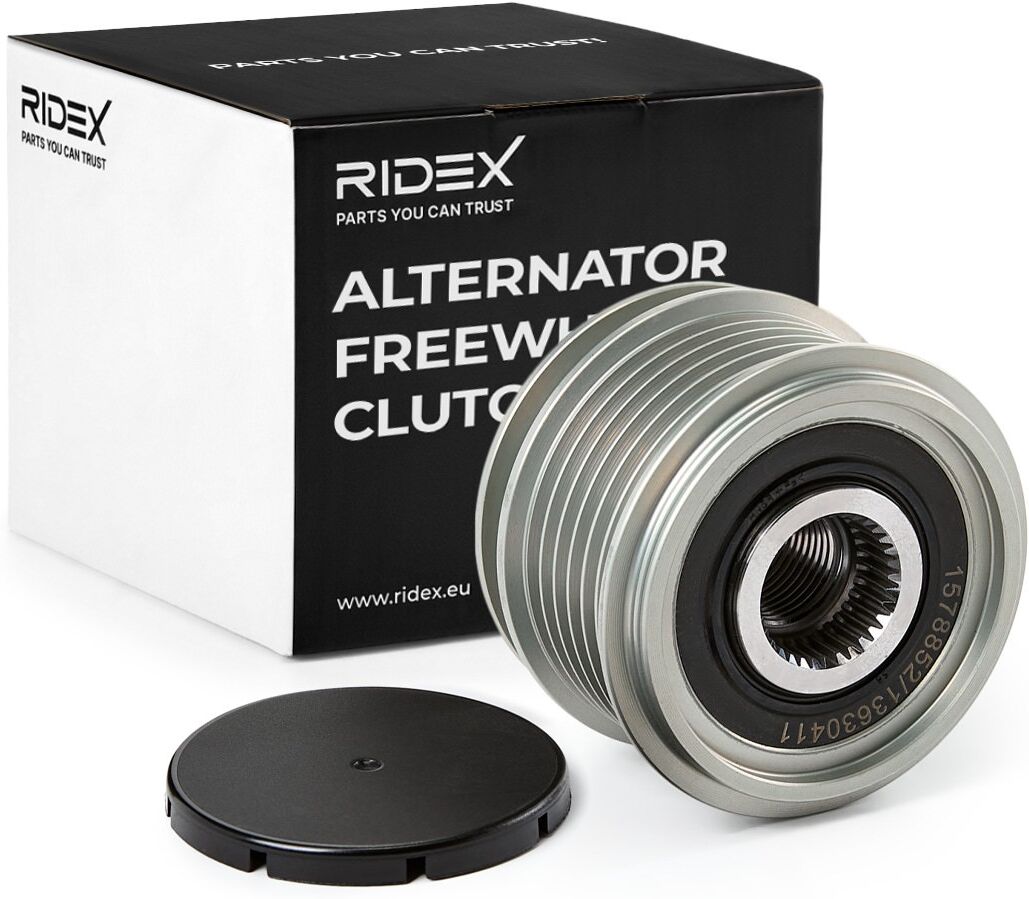
RIDEX 1390F0003 Alternator clutch pulleyBelt Pulley Ø [mm]: 56; Width [mm]: 41; Thread Size: M16; Number of grooves: 6; Depth [mm]: 11, 11,1; Bore Diameter [mm]: 17; Bolt Head-/Nut Design: Torx; Rotation Direction: Clockwise rotation; Number of Teeth: 33; Vehicle Identification Number (VIN) from: A3DC000 001, 31N.160.001, 31P.000.001, ZD304851, 8LW095001, W-095 001, X-517 025, X-055 001, X-000 001, 7M V 501501, X-521 025, 70 X 075001, W-113 661, 1J-X-000001, 1JX000001, 4B X 000001, W-024 256, 1U W 113661, X-009 001, 1J X 000001, 1-500 001, 6NY-D00 001, 6NY-Y500 001, 3-000 001, 3-029 804, 3-029804, 3-044776, 4-000 001, 2-012 770, 8E 3 029804, 8P7-103 001, 5-400 001, 6-240 001, 1K9002001, 7HA-200 001, 7JA-200 001; Construction Year from: 10/2013, 10/1994, 08/1992, 10/1993, 06/1997, 01/1992, 01/1996, 11/1991, 05/1996, 08/1993, 09/1993, 08/1996, 07/1996, 07/1995, 05/1997, 04/1996, 04/1998, 11/1995, 07/1994, 01/1999, 12/1996, 01/1998, 07/1998, 02/1996, 10/1998, 08/1998, 09/2000, 02/1999, 10/1996, 09/1997, 05/1998, 11/2013, 03/1997, 01/1997, 04/1997, 03/1998, 08/1997, 10/1997, 01/1994, 02/1998, 11/1997, 11/1998, 12/1997, 10/1999, 04/1999, 05/1999, 05/2008, 11/1999, 09/1999, 05/2000, 06/2000, 03/2000, 02/2000, 01/2000, 10/2000, 01/2001, 05/2001, 04/2001, 11/2001, 05/2002, 11/2002, 01/2003, 05/2005, 04/2003, 12/2003, 01/2005, 09/2008, 06/2005, 04/2004, 01/2006, 12/2013, 11/2016, 06/2007, 10/2005, 02/2002, 03/2003, 08/1995, 05/2014, 11/2018, 05/2015, 08/2008, 07/2008, 11/2008, 10/2015, 05/2009, 01/2008, 02/2012, 03/2015, 05/2013, 05/2016, 12/2014, 08/2015, 07/2017, 07/2018, 11/2003; Construction Year to: 12/1994, 07/1995, 12/1999, 06/1995, 03/1992, 12/1997, 02/1999, 05/1998, 02/1998, 12/1996, 09/1995, 04/1997, 11/1993, 06/1999, 11/2001, 03/1997, 09/1997, 01/1995, 06/1996, 08/2002, 04/1999, 10/2000, 07/1999, 05/1999, 02/2000, 03/2006, 06/2000, 09/1998, 08/1999, 06/2003, 12/1998, 11/2000, 08/2000, 10/1993, 10/1998, 06/1997, 05/1997, 05/2001, 08/2001, 05/2004, 09/2000, 03/2000, 04/2001, 07/1998, 05/2005, 12/2001, 03/2012, 04/2002, 11/2008, 09/2001, 05/2006, 04/2014, 04/2015, 09/2004, 05/2003, 08/1998, 07/2001, 10/2005, 07/2004, 04/2000, 12/2007, 05/2002, 10/2003, 04/2004, 02/2001, 06/2005, 04/2006, 07/2007, 06/2008, 09/2010, 12/2005, 09/2008, 03/2009, 05/2010, 11/2009, 08/2006, 01/2009, 06/2010, 07/2010, 06/2007, 09/2003, 03/2019, 03/2013, 08/2012, 05/2015, 08/2020, 11/2017, 07/2016, 11/2019, 12/2019, 07/2020; Vehicle Identification Number (VIN) to: S-110000, S-004000, 1HS350000, N-200000, X-026 679, S-350000, 6NT.022.636, 6NT.089.000, X-515 715, 8LW095000, X-517 024, X-075 000, W-113 660, X-001 754, 1J-W-200000, W-200 000, 1JW200000, X-009 000, W-024 255, W-095 000, 1-070 000, 3-024775, 4-150 000, 3-500 000, 8E 3 024775, 8E 3 029803, 8P7-250 000, 3CB 050 000, 6-240 000, 5-400 000; Vehicle Equipment: for vehicles with air conditioning (manually controlled); Engine Number from: 1UW113661, 04LB, 03LK, 04LL; Alternator Charging Current [A]: 120; Manufacturer Restriction: VALEO16,49 £*Shipping: 8,45 £Secure redirect to the provider
-
RIDEX 1390F0010 Alternator clutch pulleyWidth [mm]: 40,6; Number of ribs: 6; Inner Diameter [mm]: 17; Outer Diameter [mm]: 61,1; Alternator Charging Current [A]: 110, 120, 80, 75, 125; Manufacturer Restriction: Valeo; Engine Code: F9Q 734, F9Q 731, F9Q 736, F9Q 710, F9Q 717, F9Q 780, F9Q 782, F9Q 740, F9Q 748, F9Q 732, F9Q 744, F9Q 733, F9Q 738, F9Q 796, F4P 771, FAP 770, F9Q 790, F4P 77015,99 £*Shipping: 8,45 £Secure redirect to the provider
-
Is the motorcycle's alternator broken?
Without further information or inspection, it is difficult to determine if the motorcycle's alternator is broken. However, common signs of a broken alternator include dimming headlights, a dead battery, strange noises, or difficulty starting the motorcycle. It is best to have a professional mechanic inspect the motorcycle to accurately diagnose and repair any issues with the alternator. **
-
Is the alternator output sufficient?
To determine if the alternator output is sufficient, you will need to measure the voltage output of the alternator while the engine is running. A healthy alternator should produce around 13.8 to 14.2 volts. If the voltage output is within this range, then the alternator output is likely sufficient. However, if the voltage output is consistently below this range, then the alternator may not be providing enough power to the vehicle's electrical system and may need to be replaced or repaired. **
-
Do electric cars have an alternator?
No, electric cars do not have an alternator. Alternators are used in traditional gasoline-powered vehicles to generate electricity and recharge the battery while the engine is running. In electric cars, the battery is charged by plugging the vehicle into an external power source, such as a charging station or a wall outlet, rather than through an alternator. Electric cars use an onboard charger to convert AC power from the grid into DC power to charge the battery. **
-
How do you replace the alternator?
To replace the alternator, start by disconnecting the negative battery cable to prevent any electrical accidents. Then, locate the alternator and remove any components blocking access to it. Next, disconnect the electrical connectors and mounting bolts securing the alternator in place. After removing the old alternator, install the new one in the reverse order, making sure to tighten all bolts and reconnect all electrical connections. Finally, reattach the negative battery cable and start the vehicle to ensure the new alternator is functioning properly. If you are unsure about any step, it is best to consult a professional mechanic for assistance. **
* All prices are inclusive of VAT and, if applicable, plus shipping costs. The offer information is based on the details provided by the respective shop and is updated through automated processes. Real-time updates do not occur, so deviations can occur in individual cases. ** Note: Parts of this content were created by AI.