Buy zxa.eu ?
We are moving the project
zxa.eu .
Are you interested in purchasing the domain
zxa.eu ?
domain@kv-gmbh.de · 0541-91531010
Buy zxa.eu ?
Is a 12-year-old Chianti still drinkable?
Yes, a 12-year-old Chianti can still be drinkable, especially if it has been stored properly in a cool, dark place. Chianti is a red wine that is known for its aging potential, and many Chianti wines can continue to develop and improve in flavor over time. However, it's important to note that not all Chianti wines are meant for long-term aging, so it's best to consult with a wine expert or sommelier to determine if a specific bottle of Chianti is still drinkable after 12 years. **
When do you use il faut and il ne faut pas?
"Il faut" is used to express what is necessary or required, while "il ne faut pas" is used to express what is not allowed or should be avoided. For example, you would use "il faut" to say "il faut étudier pour réussir" (it is necessary to study to succeed), and "il ne faut pas" to say "il ne faut pas fumer dans ce lieu" (smoking is not allowed in this place). These expressions are used to give advice, make recommendations, or set rules. **


Similar search terms for Zingarelli-Il-Crocino-Chianti
Top-Angebote
Products related to Zingarelli-Il-Crocino-Chianti:
-
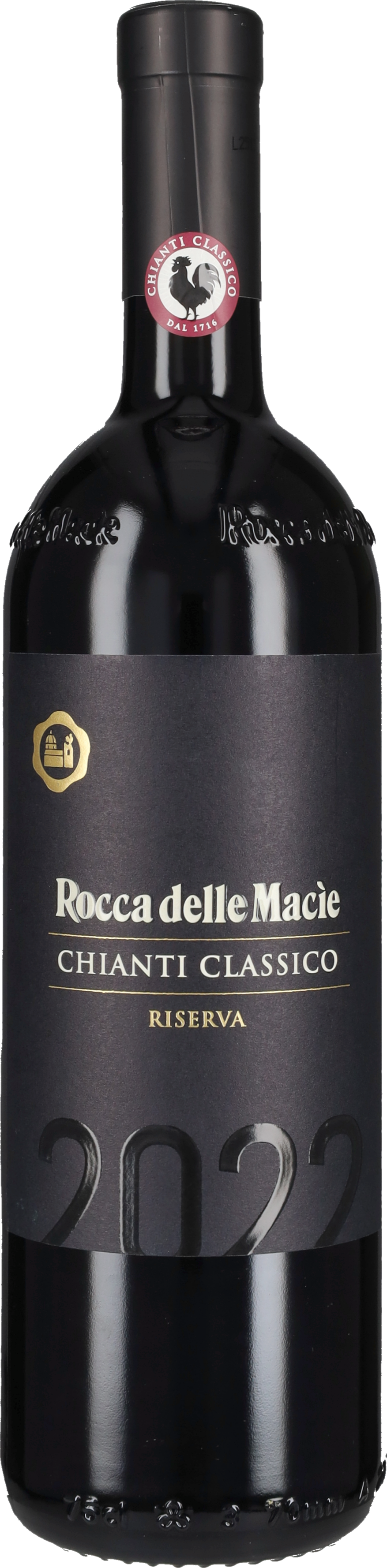
Chianti Classico 'Famiglia Zingarelli' Rocca delle Macie 2024The Chianti Classico wine “Famiglia Zingarelli” is the symbol of the production of Rocca delle Macie, a reality that has its roots in the Chiantigiano, describing this important wine-growing area with great precision. The study accumulated over years of experience in the zoning of the estate's parcels is the basis for the production of a label that we could define as typical and territorial, since with every sip one encounters what one expects from a great Chianti: fruit and violet on the nose and a lively and vibrant sip in the mouth, which satisfies the palate. A label that is always a safe bet, offered at a more than convenient price. This “Famiglia Zingarelli” is a Chianti Classico that comes from a blend where, in addition to the legendary Sangiovese, a purebred of the territory, we also find a very small percentage of Merlot. During the harvest phase, the bunches are selected with great care and, after destemming, the grapes are pressed. The obtained must ferments in red, macerating on the skins for a total of 12-14days. We then proceed with the final aging phase, which lasts between 6 and 10 months, depending on the evolution of the wine, and takes place in large Slavonian oak barrels. The Chianti Classico “Famiglia Zingarelli” Rocca delle Macie presents itself in the glass with a ruby color, characterized by a nice concentration. The flowers announce themselves first on the nose, opening up to a backdrop of more spicy and fruity notes. On the palate, it is full-bodied, clear, with a sip that reveals a good tannic grip, well balanced in the overall economy of a fresh and agile structure. It finishes with a long-lasting finish. A label that is an ambassador of the more than positive journey undertaken by the winery in recent decades, both in terms of improvements and innovations adopted in the vineyards and in the study of the individual plots of land.11,00 £*Shipping: 48,00 £Secure redirect to the provider
-
Chianti Classico Riserva 'Famiglia Zingarelli' Rocca delle Macie 2023Chianti Classico Riserva is one of the flagship wines of the Tuscan winery Rocca delle Macìe. It is a wine that symbolises the territory of Castellina in Chianti, the result of a selection of the estate's best grapes. It is a prestigious label dedicated to the Zingarelli family, created to celebrate its historical bond with the land of Chianti. The quality of the best Sangiovese and the long ageing in wood contribute to a great red, intense, rich and persistent.Chianti Classico Riserva is produced with the best grapes from the vineyards of the four estate estates: Rocca delle Macìe, Sant'Alfonso, Riserva di Fizzano and Le Tavolelle. All four estates are located in the municipality of Castellina, in the southwest area of the Chianti Classico zone. This is an area historically highly suited to the cultivation of vines, with heterogeneous soils, characterised by the presence of Galestro and Alberese and a cool climate that allows the Sangiovese to reach perfect ripeness slowly and gradually. Sangiovese forms the backbone of the wine, to which are added small percentages of Cabernet Sauvignon and Merlot, which complete the blend with their noble aromas. Fermentation takes place in temperature-controlled steel tanks. The wine rests for a period of 24 months in 35-hectolitre French oak barrels and concludes the ageing period with 3 months in the bottle.Rocca delle Macìe's Riserva Chianti Classico is a great Tuscan red that expresses the high quality of wines from the classic Chianti area. In the glass it is ruby red in colour with garnet reflections. The aromatic profile is fine and elegant, with scents of dried rose petals, violets, small berries, herbs and spices. The sip is intense and complex with an evolved tannic texture and a persistent finish.17,00 £*Shipping: 48,00 £Secure redirect to the provider
-
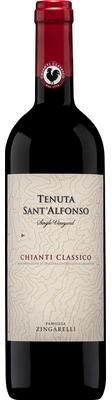
"""Zingarelli Chianti Classico Tenuta Sant'Alfonso 2020 Red Wine - Italy""""""Intense ruby red with garnet reflections. Persistent aromas of ripe, red berries and plums. Well-balanced, with forward fruit, smooth tannins and a lengthy finish. Vegan-Friendly Fresh, with lots of flowers and cherries and some orange-peel..."30,97 $*Shipping: 0,00 $Secure redirect to the provider


-
What is the difference between il faut que and il faut?
"Il faut" is used to express a general necessity or obligation, while "il faut que" is used to introduce a specific action or event that is necessary or required. For example, "il faut manger" means "it is necessary to eat" in a general sense, while "il faut que tu manges" means "you need to eat" in a specific sense. "Il faut" is used to make a general statement about what is necessary, while "il faut que" is used to specify what needs to be done. **
-
Why is it souhaite-t-il and not souhaite-s-il?
In French, the pronoun "il" (he) is combined with the verb "souhaiter" (to wish) to form the phrase "souhaite-t-il" because of the rule of verb inversion in interrogative sentences. When forming a question in French, the subject pronoun and the verb are inverted, so "souhaite-t-il" follows this rule. The "t" is added to create a liaison between the verb and the pronoun, making the pronunciation smoother. **
-
How does "il faut" work in French?
"Il faut" is a common expression in French that is used to convey the idea of necessity or obligation. It is followed by an infinitive verb and is used to express what needs to be done or what is necessary in a given situation. For example, "Il faut manger" means "It is necessary to eat." This expression is used to give advice, make suggestions, or express general truths. **
-
What is an El, Sl, and Il?
An El, Sl, and Il are all suffixes used in the English language to form adjectives. "El" is used to form adjectives that mean "pertaining to" or "characterized by," such as in the word "musical." "Sl" is used to form adjectives that mean "tending to" or "inclined to," such as in the word "careful." "Il" is used to form adjectives that mean "having the nature of" or "capable of," such as in the word "flexible." These suffixes help to create new adjectives by modifying the meaning of the base word. **


What comes after il faudrait in French?
In French, "il faudrait" is followed by the infinitive form of a verb. This construction is used to express a suggestion or a polite request. For example, "il faudrait partir tôt" means "it would be necessary to leave early." **
Which words contain an il in the middle?
Some words that contain "il" in the middle are: civil, child, mild, wild, and similar. These words have the letter combination "il" in the middle of the word. **
Top-Angebote
Products related to Zingarelli-Il-Crocino-Chianti:
-
"""Zingarelli Il Crocino Chianti Classico Gran Selezione Tenuta Fizzano 2020 Red Wine - Italy""""""Intense ruby red Intense with hints of wild berries and well-balanced spice. Warm with ripe red fruit aromas and a long finish. Blend: 90% Sangiovese, 10% Colorino Vegan-Friendly"""48,99 $*Shipping: 0,00 $Secure redirect to the provider
-
"""Zingarelli Sergio Zingarelli Chianti Classico Gran Selezione 2018 Red Wine - Italy""""""Ruby red. Intense, persistent red fruit with touches of spice. Warm, silky mouthfeel with elegant tannins. Well-balanced with ripe red fruit flavors. Vegan-Friendly Offers bright cherry, raspberry, floral and earth aromas and flavors matched to a..."97,99 $*Shipping: 0,00 $Secure redirect to the provider
-
Chianti Classico 'Famiglia Zingarelli' Rocca delle Macie 2024The Chianti Classico wine “Famiglia Zingarelli” is the symbol of the production of Rocca delle Macie, a reality that has its roots in the Chiantigiano, describing this important wine-growing area with great precision. The study accumulated over years of experience in the zoning of the estate's parcels is the basis for the production of a label that we could define as typical and territorial, since with every sip one encounters what one expects from a great Chianti: fruit and violet on the nose and a lively and vibrant sip in the mouth, which satisfies the palate. A label that is always a safe bet, offered at a more than convenient price. This “Famiglia Zingarelli” is a Chianti Classico that comes from a blend where, in addition to the legendary Sangiovese, a purebred of the territory, we also find a very small percentage of Merlot. During the harvest phase, the bunches are selected with great care and, after destemming, the grapes are pressed. The obtained must ferments in red, macerating on the skins for a total of 12-14days. We then proceed with the final aging phase, which lasts between 6 and 10 months, depending on the evolution of the wine, and takes place in large Slavonian oak barrels. The Chianti Classico “Famiglia Zingarelli” Rocca delle Macie presents itself in the glass with a ruby color, characterized by a nice concentration. The flowers announce themselves first on the nose, opening up to a backdrop of more spicy and fruity notes. On the palate, it is full-bodied, clear, with a sip that reveals a good tannic grip, well balanced in the overall economy of a fresh and agile structure. It finishes with a long-lasting finish. A label that is an ambassador of the more than positive journey undertaken by the winery in recent decades, both in terms of improvements and innovations adopted in the vineyards and in the study of the individual plots of land.11,00 £*Shipping: 48,00 £Secure redirect to the provider
-
Chianti Classico Riserva 'Famiglia Zingarelli' Rocca delle Macie 2023Chianti Classico Riserva is one of the flagship wines of the Tuscan winery Rocca delle Macìe. It is a wine that symbolises the territory of Castellina in Chianti, the result of a selection of the estate's best grapes. It is a prestigious label dedicated to the Zingarelli family, created to celebrate its historical bond with the land of Chianti. The quality of the best Sangiovese and the long ageing in wood contribute to a great red, intense, rich and persistent.Chianti Classico Riserva is produced with the best grapes from the vineyards of the four estate estates: Rocca delle Macìe, Sant'Alfonso, Riserva di Fizzano and Le Tavolelle. All four estates are located in the municipality of Castellina, in the southwest area of the Chianti Classico zone. This is an area historically highly suited to the cultivation of vines, with heterogeneous soils, characterised by the presence of Galestro and Alberese and a cool climate that allows the Sangiovese to reach perfect ripeness slowly and gradually. Sangiovese forms the backbone of the wine, to which are added small percentages of Cabernet Sauvignon and Merlot, which complete the blend with their noble aromas. Fermentation takes place in temperature-controlled steel tanks. The wine rests for a period of 24 months in 35-hectolitre French oak barrels and concludes the ageing period with 3 months in the bottle.Rocca delle Macìe's Riserva Chianti Classico is a great Tuscan red that expresses the high quality of wines from the classic Chianti area. In the glass it is ruby red in colour with garnet reflections. The aromatic profile is fine and elegant, with scents of dried rose petals, violets, small berries, herbs and spices. The sip is intense and complex with an evolved tannic texture and a persistent finish.17,00 £*Shipping: 48,00 £Secure redirect to the provider
-
Is a 12-year-old Chianti still drinkable?
Yes, a 12-year-old Chianti can still be drinkable, especially if it has been stored properly in a cool, dark place. Chianti is a red wine that is known for its aging potential, and many Chianti wines can continue to develop and improve in flavor over time. However, it's important to note that not all Chianti wines are meant for long-term aging, so it's best to consult with a wine expert or sommelier to determine if a specific bottle of Chianti is still drinkable after 12 years. **
-
When do you use il faut and il ne faut pas?
"Il faut" is used to express what is necessary or required, while "il ne faut pas" is used to express what is not allowed or should be avoided. For example, you would use "il faut" to say "il faut étudier pour réussir" (it is necessary to study to succeed), and "il ne faut pas" to say "il ne faut pas fumer dans ce lieu" (smoking is not allowed in this place). These expressions are used to give advice, make recommendations, or set rules. **
-
What is the difference between il faut que and il faut?
"Il faut" is used to express a general necessity or obligation, while "il faut que" is used to introduce a specific action or event that is necessary or required. For example, "il faut manger" means "it is necessary to eat" in a general sense, while "il faut que tu manges" means "you need to eat" in a specific sense. "Il faut" is used to make a general statement about what is necessary, while "il faut que" is used to specify what needs to be done. **
-
Why is it souhaite-t-il and not souhaite-s-il?
In French, the pronoun "il" (he) is combined with the verb "souhaiter" (to wish) to form the phrase "souhaite-t-il" because of the rule of verb inversion in interrogative sentences. When forming a question in French, the subject pronoun and the verb are inverted, so "souhaite-t-il" follows this rule. The "t" is added to create a liaison between the verb and the pronoun, making the pronunciation smoother. **
Similar search terms for Zingarelli-Il-Crocino-Chianti
-
"""Zingarelli Chianti Classico Tenuta Sant'Alfonso 2020 Red Wine - Italy""""""Intense ruby red with garnet reflections. Persistent aromas of ripe, red berries and plums. Well-balanced, with forward fruit, smooth tannins and a lengthy finish. Vegan-Friendly Fresh, with lots of flowers and cherries and some orange-peel..."30,97 $*Shipping: 0,00 $Secure redirect to the provider
-
Chianti Riserva 'Il Fagiano' Uggiano 2022The Chianti Riserva "Il Fagiano" by Uggiano is a classic Tuscan red, representing one of the most interesting interpretations of this historic and ancient expression of our rich winemaking heritage. It is made with almost pure Sangiovese grapes, to which a small percentage of Canaiolo is added. The long aging period in wood gives the wine a good body and an important structure, with mature and pleasantly harmonious aromas, which reflect the genuine and authentic taste of a great Sangiovese and the magnificent terroir of the Chianti area. The red "Il Fagiano" is a Chianti Riserva that comes to light in one of the most scenically beautiful corners of Tuscany for wine. The vineyards of the Uggiano estate extend for about 80 hectares among the splendid hilly landscape of Montespertoli, Montelupo Fiorentino, and San Casciano in Val di Pesa, in the heart of the wonderful territory of Chianti Classico. In this land, Sangiovese has dominated uncontested for centuries, although traditionally some ancient varieties find space in the vineyards.indigenous, such as Ciliegiolo, Canaiolo, and Mammolo, along with the inevitable Bordeaux varieties Cabernet Sauvignon and Merlot. The management of the vineyards and the work in the cellar is carried out meticulously, with the sole aim of producing great wines that are a true reflection of the territory and its most typical and representative grape varieties. “Il Fagiano” Chianti Riserva di Uggiano is produced with a careful selection of the estate's grapes and a controlled temperature fermentation with skin maceration. Before being bottled, the wine rests for a full 14 months in French oak barriques and 8 months in large 60-hectoliter barrels. In the glass, it has a rather intense ruby red color. The bouquet expresses elegant and refined aromas of violets, notes of sour cherry, ripe cherry, berries, delicate hints of vanilla, and oriental spices. The palate is intense and fruity, with a lively and elegant tannic texture. The finish is harmonious and has good persistence, with a pleasantly fresh close.12,00 £*Shipping: 48,00 £Secure redirect to the provider
-
"""Il Molino di Grace""" """Il Molino di Grace Chianti Classico 2024 Red Wine - Italy""""""Fresh and approachable, showing strawberries, sour cherries and a touch of spices. Medium-bodied, juicy and smooth, with lightly chewy tannins adding grip. Easygoing but well-balanced. From organically grown grapes."""26,97 $*Shipping: 0,00 $Secure redirect to the provider
-
How does "il faut" work in French?
"Il faut" is a common expression in French that is used to convey the idea of necessity or obligation. It is followed by an infinitive verb and is used to express what needs to be done or what is necessary in a given situation. For example, "Il faut manger" means "It is necessary to eat." This expression is used to give advice, make suggestions, or express general truths. **
-
What is an El, Sl, and Il?
An El, Sl, and Il are all suffixes used in the English language to form adjectives. "El" is used to form adjectives that mean "pertaining to" or "characterized by," such as in the word "musical." "Sl" is used to form adjectives that mean "tending to" or "inclined to," such as in the word "careful." "Il" is used to form adjectives that mean "having the nature of" or "capable of," such as in the word "flexible." These suffixes help to create new adjectives by modifying the meaning of the base word. **
-
What comes after il faudrait in French?
In French, "il faudrait" is followed by the infinitive form of a verb. This construction is used to express a suggestion or a polite request. For example, "il faudrait partir tôt" means "it would be necessary to leave early." **
-
Which words contain an il in the middle?
Some words that contain "il" in the middle are: civil, child, mild, wild, and similar. These words have the letter combination "il" in the middle of the word. **
* All prices are inclusive of VAT and, if applicable, plus shipping costs. The offer information is based on the details provided by the respective shop and is updated through automated processes. Real-time updates do not occur, so deviations can occur in individual cases. ** Note: Parts of this content were created by AI.